Posted by
karosambhavfoundation
on
July 21, 2023
Source segregation
is the act of sorting and separating various sorts of waste materials at their starting point, encouraging recycling and reducing environmental impact. By segregating things like paper, plastics, glass, and natural waste, it becomes more straightforward to
productively process and reuse them. This maintainable waste administration approach limits landfill waste and saves assets. Local area support is pivotal in advancing source isolation through training and mindfulness crusades. States and associations assume
an imperative part in carrying out strong strategies and foundations. Source isolation helps the climate as well as encourages a culture of liability, advancing a cleaner and greener future for a long time into the future.
|
Posted by
Susan Sharma
on
June 18, 2016

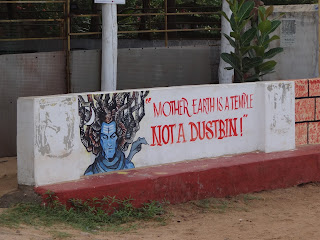
"Mother earth is a temple, not a dustbin" screamed a notice board in a tea shop at Varkala beach, Kerala. The plastic, thermocol, Styrofoam etc which we so carelessly throw away, finally lands up in the ocean, carried by rain, rivers etc.
The short video I put together on World Oceans Day, portrays the simmering anger of the oceans through the incessant beating of the Dhol.
Watch it at
Oceans and Us
https://www.youtube.com/watch?v=MXDcWYK9_oI
When I write "plastic" and hit the search button on http://IndianwildlifeClub.com, I get a few pages of results. Here are a few random one liners from those results, which sum up our plastic malady.
"Major cause of floods was Mumbai’s plastic bags choking the city’s drainage system."
"Storm-water drains choked with ubiquitous plastic carry bags are partly responsible for Mumbai's woes."
"The Maharashtra government announced the decision to ban the use of plastic bags across the state after reviewing the situation."
"A landmark 1990 study by the research firm Franklin Associates—says
Plastic is not biodegradable, it litters our waterways and coastal areas, and has been shown to choke the life out of unsuspecting wildlife."
"The leather-back turtle feeds almost exclusively on jellyfish and cannot distinguish between plastic bags and jelly fish"
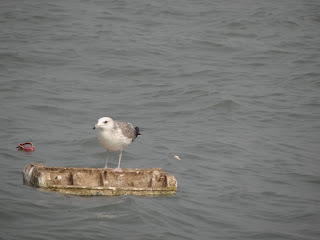
Fish and sea birds have been choking on plastic litter
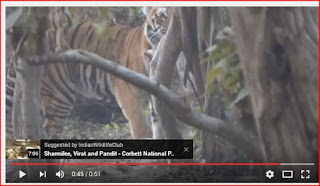
And now, we have the Bengal tiger holding up a plastic cement bag left out near a water hole, as if to ask what am I supposed to do with this?
Watch this terrible episode we were witness to at the link
Sharmilee, Virat and Pandit - Corbett National Park
https://www.youtube.com/watch?v=rkea2m2gJow
Let us empower the rag picker who helps recycle bio-degradable waste.
If we go by road to Corbett National Park, you have to pass a place called Kashipur. Here, for miles at a stretch, we see plastic gunny bags, just like the one our tiger is carrying. These are filled with more plastic and more bio degradable stuff. They
seem to be piled on the road sides for ever awaiting disposal/recycling.
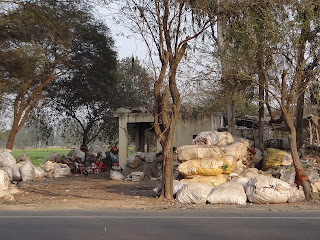
Empower the waste recycling factories and give them visibility before we drown ourselves in plastic waste.
|
Posted by
Shashi Kant Sharma
on
July 08, 2013
Yes the name of this Gem is 'Purushottam' i.e., purush+Uttam (the Man who excells among all Men) and he is the Priest of the Shiva Temple in Jaipur. He excelled all Men/Priests (?) too by taking his devotion/reverence to the Lord beyond the ordinary. He
noticed that hundreds of gallons of Water and Milk poured for the 'abhisheka' of the ShivLing was flowing into the passage used by the devotees, ending up under their feet and into the drains...........Out of the Box thinking by this Gem led him to persuading
all concerned to harvest this holy water/milk...........Having done that 4+ years ago for his temple, not only has he had the satisfaction of seeing the locality handpump starting to pump water, but also helped him convince managements of other temples and
get them to adopt the best practice he devised.......That is truly socially responsible living and devotion with mindfulness- a story that may become a part of talks on CSR and this truly is a good example of TSR (Temple social responsibility). Great power
to his 'aarti-holding hand' and devotion
Must thank Times of India who discovered Purushottam, his Shiva Temple and published the story.
Read it on the following link
http://articles.timesofindia.indiatimes.com/2013-05-28/news/39580718_1_water-harvesting-system-temple-priest-shiva-temple
|
Posted by
Susan Sharma
on
February 15, 2008
Waste to health bioconversion
The theory propounded by Dr. Uday Bhawalkar that excess nitrates affect abiotic and biotic phenomena which was a Phd Thesis in IIT Mumbai, has since been patented and is awaiting commercial exploitation.
Pollution reduction through a natural enzyme based bio catalyst, "Biosanitiser", which Dr Bhawalkar developed as a proprietary technology, has been patented in India nad America.
Treatment of waste generated at household, farms and other biological waste generating sources must include segregation, methanation and stabilisation along with the use of Biosanitiser to treat waste in a holistic manner.
Source: http://www.wastetohealth.com/
|
Posted by
Susan Sharma
on
February 15, 2008
Clean cellulose from biomass wastes
Khaitan brothers have developed a clean technology, which enables clean cellulose from biomass wastes like rice, wheat straws and bagasse. Modified Kraft Chemical Recovery (MKCR) technology was developed in a straw pulping mill making paper. The black liquor
coming out as an effluent from pulping of above wastes contains caustic soda, lignin and silica besides lime. MKCR enables:
· recovery of caustic soda,
· silica as a dry precipitate,
· energy from the lignin, which gets burnt as an unique Wet Mix Fuel in a cogeneration biomass boiler, raising steam and electricity which meet process needs and also a surplus which can be wheeled to the electricity supply grid.
· Lime is also recovered.
It uses biomass wastes like rice husk or straw to enable this recovery process of chemicals and energy. Hence all process needs will be met by biomass wastes and products are clean cellulose, caustic soda which gets recycled, silica as a dry precipitate, lime
and energy from the lignin. The whole process would be net zero in GHG emission and energy positive in terms of energy balance and material balance.
Clean cellulose can be converted into many value added products as a basic carbohydrate. Up to 90% of the clean cellulose short fibres can be used in blends to make photocopier grade paper (Map Litho), substituting wood fibres from trees.
Clean cellulose can be hydrolysed into simple sugars. In fact a technology patent has been applied in India, which has already established in lab scale, conversion of alpha cellulose and hemi cellulose into C6 and C5 simple sugars. fermenting the sugars
into ethanol is a simple step. Hence this process is unique in enabling clean cellulose production as a first step and then conversion into ethanol with higher process efficiencies in hydrolysis and fermentation stages. While Khaitan brothers have established
the basics of the technology, it needs a pilot plant study before engineering and building a full scale commercial plant.
Present stage of development of the technology: They require funds as equity and / soft loan and invite an entrepreneurial partnership.
Contact: Mr Dinesh Khaitan: dkk@kroftaengineering.com at New Delhi
|
Posted by
Susan Sharma
on
February 01, 2008
Using flyash
Fly ash is a by-product of coal combustion in thermal plants. Presently majority of the coal ash generated is being handled in wet form and disposed off in ash ponds which is harmful for the environment and moreover ash remains unutilized for gainful applications.
India has sufficient coal reserves. In India almost 65-70% of electricity production isdependent on coal which produces a huge quantity of Fly Ash as residue which is allegedly a waste product in Thermal Power Stations.
Fly Ash has a vast potential for use in High Volume fly ash concrete especially due to its physic-chemical properties. Using fly ash in construction activity is environment friendly, reduce energy demand and restrict carbon emissions.
Transco Delhi and DMRC have been using flyash in construction activities.
When mixed with lime and water the flyash forms a cementitious compound with properties very similar to that ofPortland cement. Because of this similarity, fly ash can be used to replace aportion of cement in the concrete, providing some distinct quality
advantages.The concrete is denser resulting in a tighter, smoother surface with lessbleeding.
A good amount of research has already been done inIndia and abroad on its strength and other requisite parameters.
|
Posted by
Susan Sharma
on
November 10, 2007
Computer chips for Solar Cells
Computer maker IBM has found a way to save money, reduce waste, and contribute to the development of the solar power industry with just one smart innovation—recycling defective semiconductor chips and sending the recovered refined silicon to manufacturers
of photovoltaic solar cells.
A worldwide shortage of refined silicon, the key ingredient in both semiconductors and solar cells, has kept prices for solar power artificially high in recent years, and photovoltaic producers welcome the news of IBM’s breakthrough in processing its wasted
chips for them.
Read the full story at
http://www.emagazine.com/view/?3963
|
Posted by
Susan Sharma
on
October 05, 2007
One tonne of scrap from discarded computers contains more gold than can be produced from 17 tonne of gold ore. Mumbai alone throws away 19,00 tonne of electronic waste a year, excluding the large e-waste imports from developed nations through its port.
The projected growth for the e-waste generation for India is about 34% year on year.
India already has a few small scale regional recycling programs-’Eparisara’ and’Trishyiraya’ are two such outfits.
Source:Times of India, 8June, 2007
|
Posted by
Susan Sharma
on
October 04, 2007
Water Hyacinth- economic potential
Water hyacinth is considered a scourge on water bodies. Yet, we only have to look at our neighbours to see the economic potential of this weed.
In Bangladesh, water hyacinth fibre is dried and mixed with jute to create paper and pressed into fibre boards used for partitions.
Yarn made from the fibre is used to make furniture in Bangladesh and baskets in Philippines.
Water hyacinth is used for water purification as it is capable of absorbing heavy metals, organic compounds and pathogens from water.
In Srilanka, water hyacinth is mixed with organic municipal waste, ash and soil, composted and sold to local farmers.
|